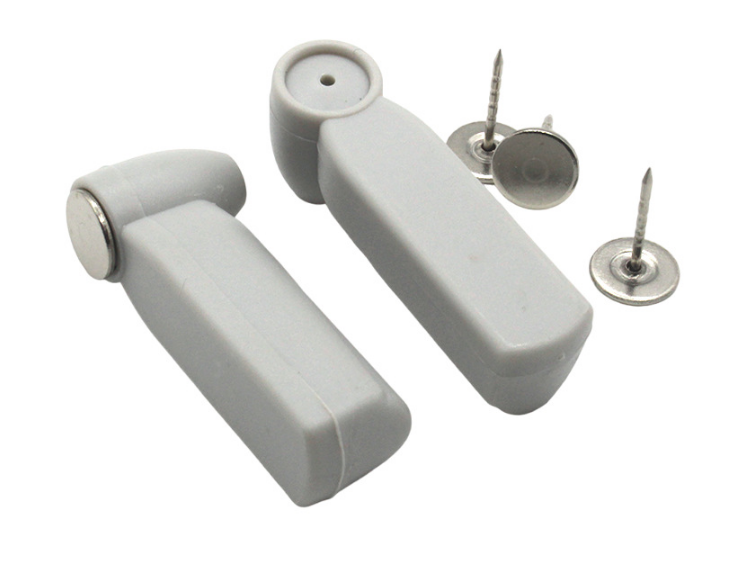
The working principle of the acoustic-magnetic (AM) security tag is based on acoustic-magnetic resonance technology. At its core, it utilizes specific frequency sound waves to generate resonance with a magnetic core for theft detection.
The tag's interior contains a magnetic core, typically made of amorphous metal (often an iron-cobalt alloy), and a permanent magnet. This permanent magnet magnetizes the core, putting it in a stable, magnetically saturated state.
When a tagged item passes through the detection gate (pedestals), the gate emits a specific frequency (approximately 58 kHz) pulsed alternating magnetic field. Under the influence of this field, the magnetized core within the tag is driven into a state of mechanical resonance, vibrating at its natural frequency. This vibration, in turn, generates a distinct magnetic signal at the same frequency.
Receiving coils within the detection gate continuously "listen" for this precise resonant signal. Upon detecting it, the system's circuitry analyzes the signal and confirms the presence of an active, non-deactivated security tag, triggering an alarm (e.g., audible and visual alerts).
During legitimate purchase, a cashier uses a specialized deactivator or detacher at the point of sale. This device applies a strong, specific magnetic field that alters the magnetic state of the tag's core—effectively "scrambling" or demagnetizing it. Once deactivated, the core loses its ability to resonate at the specific frequency. Consequently, when the item passes through the detection gate again, it no longer emits the detectable signal, and no alarm is triggered.
This principle grants acoustic-magnetic systems significant advantages, including strong resistance to interference (they are largely unaffected by common metallic items) and a long detection range (typically 1.5 to 2 meters). These characteristics make them highly suitable and reliable for merchandise protection in a wide range of retail environments.
If you have any purchase, please contact us!
Contact Us
2018-2023 EAS security rf and am systems label tags for retail. All Rights Reserved.
A Chinese anti-theft label wholesale retailer, China anti-theft soft label, China RFID anti-theft system, China's anti-theft label, China sells anti-theft labels
